Tuesday, February 25, 2014

the gender spectrum.

Gender is a big topic to jump into, but its one that really deserves time in any exploration of feminism. Like with intersectionality, its important to take into account more than one identity when thinking about social activism. If I'm going to say I want to fight for equity for women, why not also fight for equity of race, of religion, of sexual orientation? While we're at it, we also need to fight for equity of all genders, not just for women.

Before I go any further, I want to get one thing out of the way.

There are more than two genders.

Once more.

THERE ARE MORE THAN TWO GENDERS.


Ok, moving on. Its been pretty well established that feminism aims to have the rights, needs and lives of women be equitable to those of men. Its saying that men and women are all people, so why are we treated differently? But what you can't leave out is the fact that gender goes way beyond men and women. This is because gender is a spectrum!
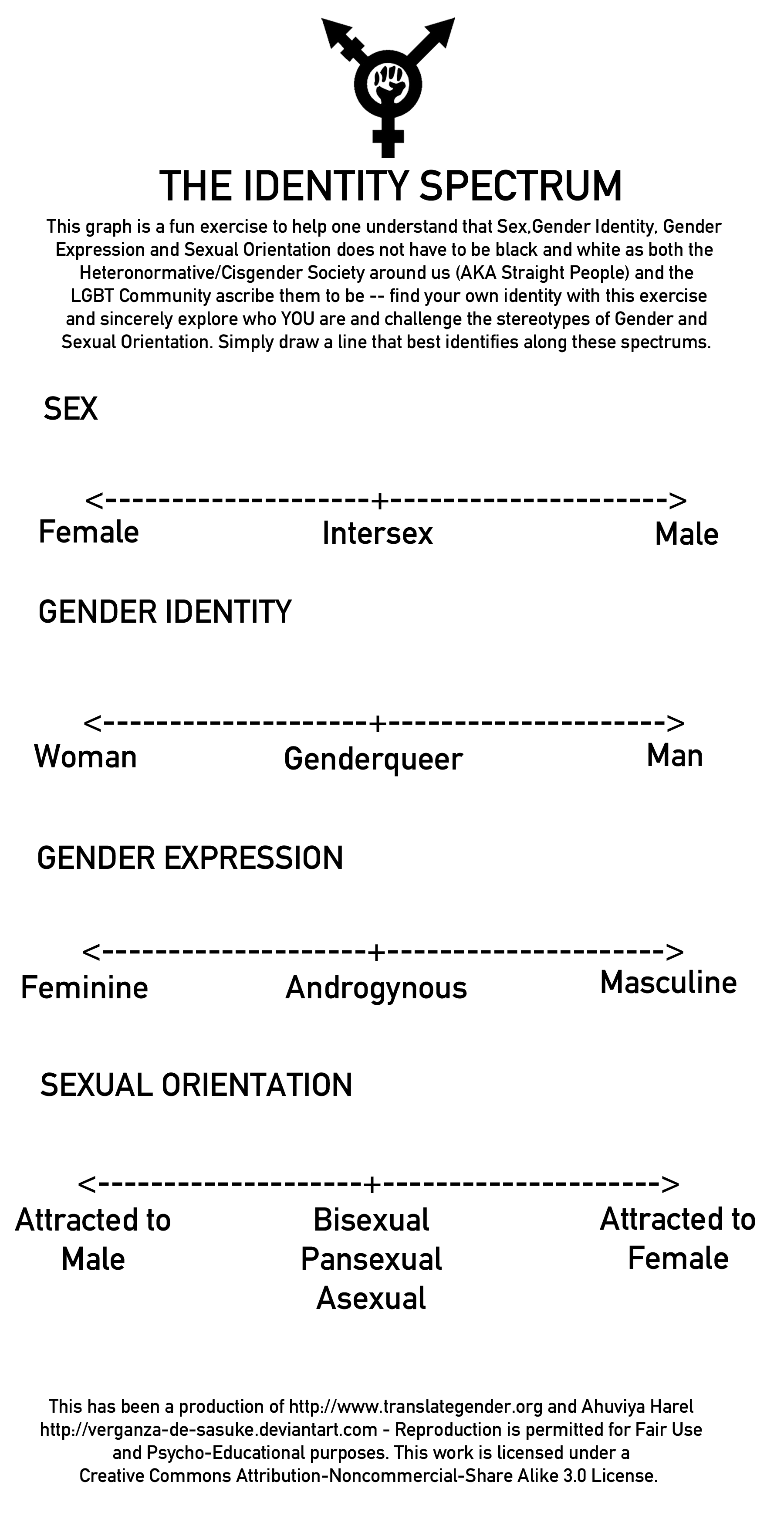

This chart shoes a few awesome spectrums, and for clarity here are a few definitions to go with that.

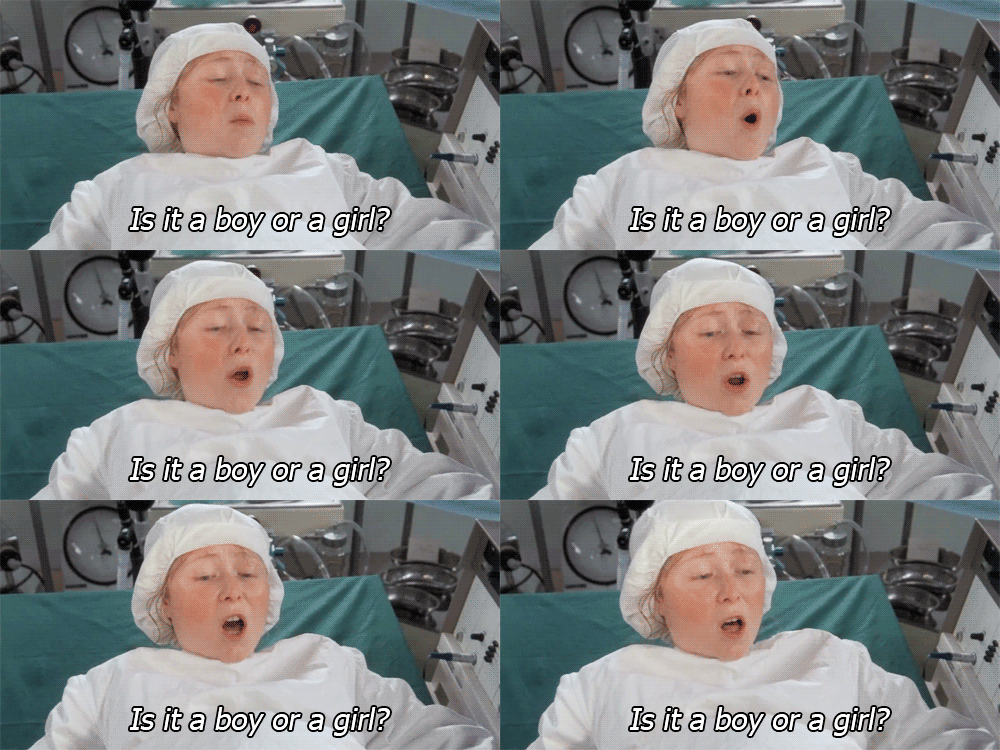
Sex is your body when you're born. You're born and the doctor looks between your legs. You could have a vulva and be called female, a penis and be called male or you could be somewhere in between and called intersex. 

Gender Identity is how you feel! You can feel like a woman, a man or anywhere in between. This image shoes genderqueer as the center, but there are lots of other words that can also be used to describe someone who feels not quite at one end or the other of the spectrum. 

Gender Expression is how you choose to show off how you feel, or how you want people to view you. 

Sexual Orientation is who you like. At one we've got attracted to female and the other we've got attracted to male. I think this one could stand to be a little differently worded, or even a different shape than a linear spectrum. By using the words male and female, we're talking about sex (as in your genitals, not fucking). So this says one side is people who dig penises and the other is people who dig vulvas. In the center have bisexual (being attracted to both men and women), pansexual (being attracted to people regardless of gender) and asexual (not feeling sexual attraction). 

This chart is a great starting point, but I think it is really important to remember that people can exist on multiple locations on these spectrums, and just because they are at one end on one, doesn't mean they need to be at the same end on another. Its all totally changable too! You may identify at one end of the spectrum one day and be feeling different the next. It is also totally up to the individual. Someone's sexual or gender identity is their own decision and it isn't up to you to place them on this chart. 

Oh goodness there is so much more to talk about with gender, but there are already a lot of words on this post. So more next time!


Tuesday, February 11, 2014

intersectionality.

There are a lot of posts I've started, but never finished on here. Mostly its because I start to ramble and go way beyond the basic ideas I planned to share.

One of those posts was about intersectionality, because its such a big topic I can't help but to ramble about it.

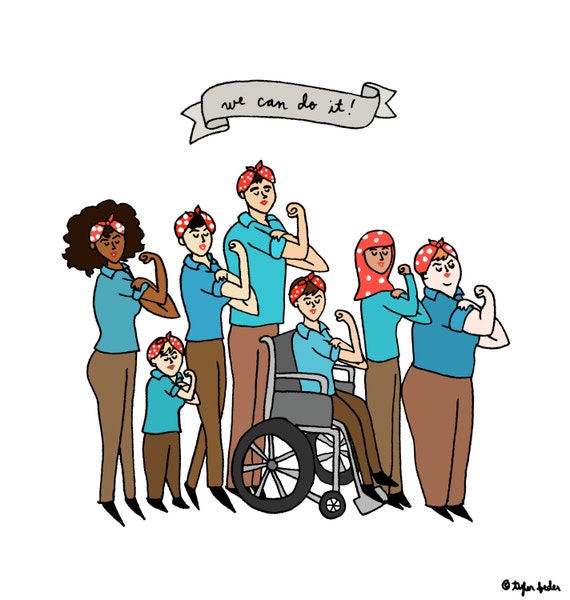
What is intersectionality you ask? The gist of it is that we all have multiple identities, and they all help to define how we see the world. A queer feminist is going to see the world differently than a straight feminist, a black woman is going to see the world differently than a black man. Its pretty simple in that sense.

It gets a bit hairier when you think of how you also have to account for that in things like activism. You man want to focus on women's issues, but a black woman may have different concerns than a white woman, and a queer woman different than a straight woman. You've got to take a moment to step beyond how you experience the world, and consider that others see it differently. You can't always step into the shoes another person is in, to see how they experience the world. What you can do is check that you have looked beyond your own life experiences and expectations, and if someone does speak up about their own needs, listen.

[x]

Monday, February 10, 2014

gazing at the olympics.

I'm not really a sports person, but I've been paying a bit of attention to the olympics this year. There are obviously some big issues going on with Russia's anti-gay laws, and its been interesting to see how individuals, corporations and other countries have spoken against them.  One video, put out by The Canadian Institute of Diversity and Inclusion, jumped out at me particularly, because they play with the idea of male gaze in an interesting way. 
Can you spot the difference?

Usually we are more familar with seeing this image on the sports page...


But what if we viewed men's sports like that too?


The male gazze is usually defined as the heterosexual male's gaze, but Canada has given us a lovely example of what happens when you turn that into the homosexual male's gaze. 

If you want to look into this a tad more, hop on over to this article, where you can read and see more about the photography of women's vs men's sports.

But lest we forget,  its not just sports that is focusing on hilighting the female body, its everywhere!


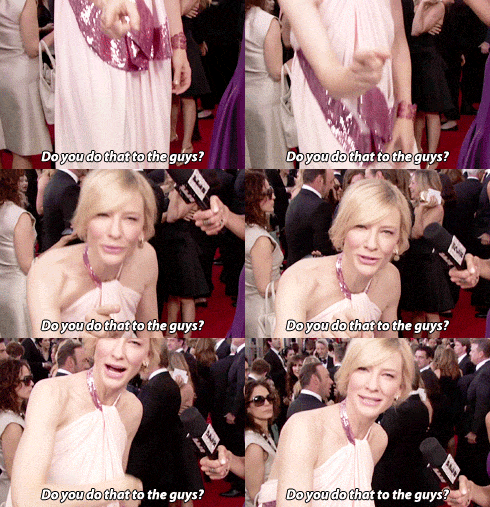
So take a tip from the wonderful Kate Blanchett, and call it out when you see it. Most people don't even realize its going on.

Friday, February 7, 2014

testing the male gaze.

One thing mentioned in the Laci Green video that I wanted to continue on a bit was the idea of male gaze.

The concept of the male gaze comes from feminist analyzation of film. It points out that most film is created from the point of view or with the audience of heterosexual male viewers in mind. These manifest itself in the types of characters, the way shots are set up and the plots and themes.

Example? A female character who is only in a movie to be the girlfriend character. In every scene she looks attractive and is there for the viewer to look at.

Its kind of hard to avoid these types of things, cause so many movies use the male gaze. Sometimes if you can't avoid it, you can alteast know what is going on. And this is where the tests come in.

There are a lot of different tests you can use to see if a movie or TV show is using the male gaze. The most commonly referred to is the Bechtel Test.


The Bechtel Test, as outlined above, requires that there be...


  1. Atleast two women...
  2. Who talk to eachother...
  3. About something other than a man. 
Some people add on to this that both women must have names, and sometimes both first and last names. 

Other tests include...


  • the Ellen Willis test: if you flip the genders, does the story still make sense?
  • the Sexy Lamp test (courtesy of Kelly Sue DeConnick): can you replace your female character with a sexy lamp and still have the story work?
  • the Mako Mori test: there is a) at least one female character, b) who gets her own narrative arc, c) that is not about supporting a man’s story.
And a new one that has popped up on tumblr...

  • the Tauriel test  a) there is a woman, b) WHO IS GOOD AT HER JOB. (Hint hint. Skyfall doesn't pass.)
So maybe you're not going to stop watching movies that don't pass this test, but what I'd encourage you to do is just be aware of it. If something doesn't feel quite right to you in a movie, or if you're wondering why the sex scene is longer than the major plot points, check back to these tests. The male gaze may be why. 

Wednesday, February 5, 2014

sexual objectification with Laci Green.

It was about time to get some additional medias involved here on this blog and what better way than sharing the fabulous Laci Green. For those unfamiliar with her, Laci Green is an awesome sex educator who among other things makes fantastic youtube videos about all kinds of topics. I'm only going to share one today, but I highly encourage you to go to her youtube channel and watch some more videos.


I chose this particular video to share because it mentions a lot of important issues that are worthy of your time. Some of these things include the male gaze, women's portrayal in advertising and what this blog is all about, what you can do about it!


So if you're still wanting more, check out some more videos! Most of Laci Green's videos are around 5 minutes in length and cover subjects from diets, slut shaming and dating advice, to how to choose a sex toy and where the g spot actually is.


Do y'all have any favorite Sex+ videos? Share them in the comments!